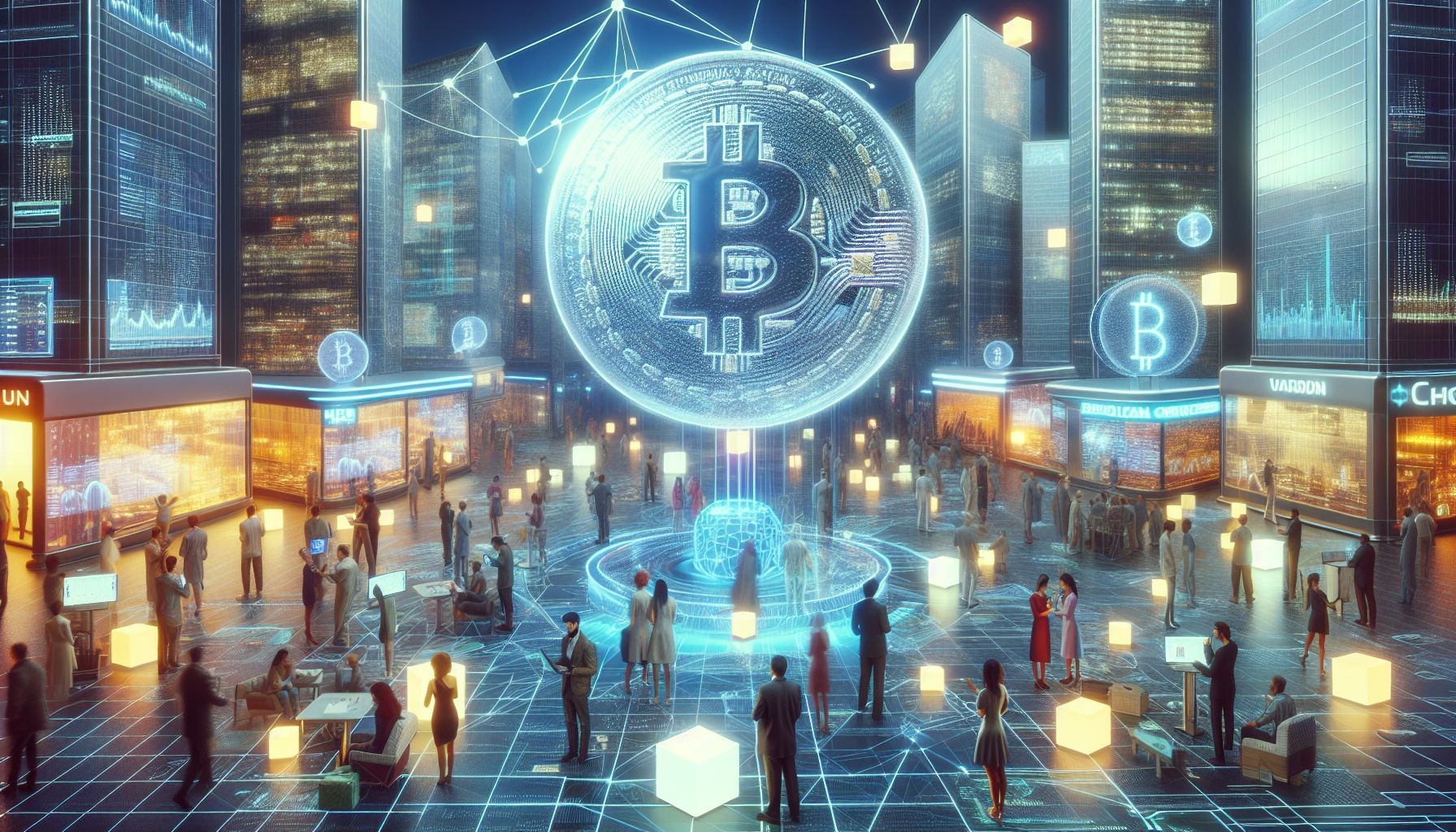

Harnessing the Power of Decentralized Finance: The Future of Banking
Decentralized Finance, or DeFi, is an emergent financial technology that could redefine the way we use money. By leveraging blockchain technology, DeFi offers a transparent and inclusive alternative to traditional banking, promising to democratize the financial markets and empower individuals.
Introduction
In a world where financial systems are predominantly controlled by centralized institutions, DeFi emerges as a beacon of hope, offering unparalleled access to financial services for people across the globe. The allure of DeFi lies in its capacity to operate without intermediaries, such as banks or brokers, thereby reducing fees, speeding up transactions, and increasing censorship resistance.
Body
The concept of DeFi is rooted in blockchain technology, primarily the Ethereum network, which allows for the creation of decentralized apps (dApps). These dApps enable users to lend, borrow, trade, and earn interest on their cryptocurrency holdings, entirely governed by smart contracts. Smart contracts are self-executing contracts with the terms of the agreement directly written into code, removing the need for a middleman.
One of the significant benefits of DeFi is increased accessibility. Unlike the conventional banking system, which often requires a plethora of documentation and account verification, DeFi platforms allow anyone with an internet connection to participate. This aspect is particularly crucial in unbanked and underbanked regions, where access to banking facilities is limited or non-existent.
Moreover, DeFi introduces innovations like yield farming and liquidity mining. Yield farming involves users moving their assets across different DeFi protocols to maximize their returns. In contrast, liquidity mining rewards users with governance tokens for providing liquidity to a DeFi protocol.
Despite its potential, DeFi is not without risks. The lack of regulation presents challenges such as susceptibility to hacks, fraud, and volatility. Furthermore, smart contracts are not infallible and can contain code errors that could result in the loss of funds.
Summary
Decentralized Finance is a transformative development, representing a shift away from centralized financial control towards a more open, efficient, and accessible financial ecosystem. With its capacity to offer financial services to anyone, anywhere, it stands as a testament to the revolutionary impact of blockchain technology. As the DeFi space matures, it heralds the possibility of a reimagined financial landscape, free from the traditional barriers of banking. However, users must navigate this new terrain with caution, informed about its risks and opportunities, and perhaps, in time, DeFi could become the new norm in global finance.